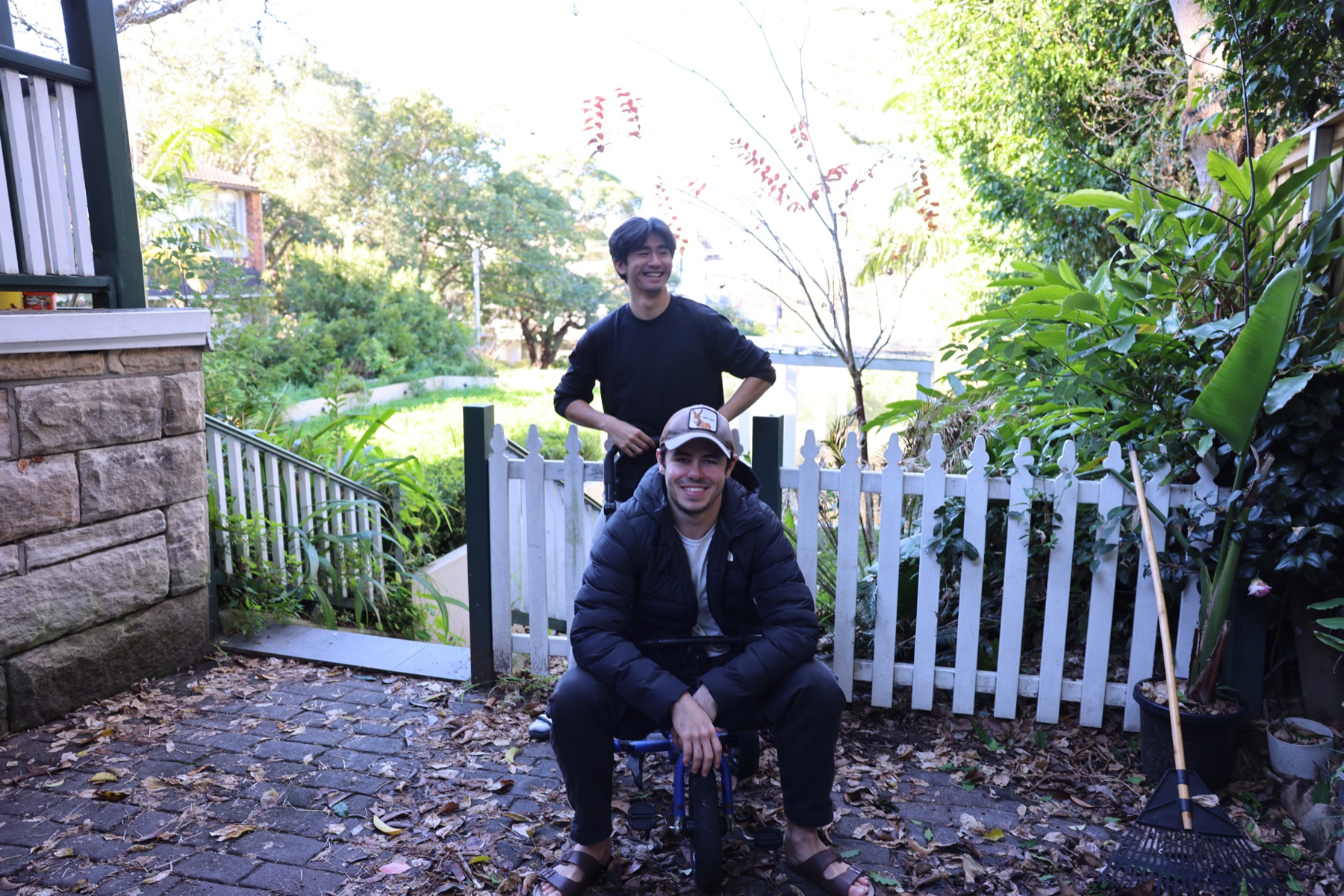
One of my first ever interactions with Pete, we found a scooter abandoned down the street.1 Param (mutual friend and our previous interviewee) hopped in and Pete pushed him all the way from Billabong to Banksia.2 It was completely random, somewhat whimsical and a ton of fun. That was basically the first time I'd properly met him face-to-face. You probably know Pete from his viral huzzlingo Linkedin post. If the world ended tomorrow and that was how he was remembered, I'd imagine he'd be kinda stoked about it. Underneath that nonchalant persona is a man who's built an app with over 2 million downloads, won an AI accelerator and has embodied perhaps every Gen Z dream life. And he's only 21 by the way.
Vietnam born and raised. His dad ran a tech company. His mum was in fashion. Both entrepreneurs — which meant Pete's earliest model for what adults do looked nothing like most of his classmates. Most kids spent their summers enjoying sleepovers with their friends or attending summer camps. Pete had an all-star lineup of engineers from his dad's company running coding camps for him. From Year 6 to end of high-school, every summer had him knee-deep in JavaScript and CSS.
"He was just literally forcing me to learn how to code. He thinks it will be good for the future, which turns out pretty well now... back then I was like, what is this?"
There's an age old debate of nature vs nurture. If you studied biology in school you would've heard something about it. For a quick summary; the debate is about if certain behaviours and way of thinking is how we are born to think, or if it all is due to how we have been raised. When I heard Pete's story my first thought was he's a prime example of the nurture case. After speaking to him for a few hours - I'm less bullish on that stance. I'd argue that Pete's 'nature' would have led him down the same path regardless of any intervention. When his peers were packing into lecture halls waiting to hear some trite lecture on the many theories on computer language, Pete was already building apps, acquiring users and making revenue. He couldn't regurgitate a passage from a textbook but he could watch YouTube videos for hours.
Most of his later education was ironically picked up from YouTube, in fact. Learning from creators like jedcal, Pete spun up his own clone of Ratemydorm called RateMySchool — a site where you rate Vietnamese International Schools. That was his first completed project as a solopreneur in highschool. Apps like Clicktutor which rose to #2 on Product Hunt were just some of the cool things he went on to build. Every product was solution to something Pete struggles with in his own life. That theme was how his first big venture was born — Dory AI.
Small pond, right fish
One day Pete got a DM from a guy named Ethan. He was running a podcast at the time and wanted to run an interview with Pete. They met again in Sydney and turned out to have the skills either side lacked. Pete on frontend and Ethan on backend. Although they decided to work together, Sydney was pretty dead at the time for young builders. There wasn't much of a startup scene and even if there was, it was hard to access. At the time though there was one place that just started to emerge. Build Club. Annie's co-working groups born out of Aurora Ventures HQ at the time were a hub for early builders, and it was the only place Pete and Ethan could find like-minded builders.
"We just went to Build Club basically every day, just to work on stuff. It served as a space — there's other people who are locking in. The vibe just motivates you to do your best work."
Pete even mentioned he sometimes slept there when he worked past his last bus time at 4am. A few months in and Build Club AI announced their first AI Accelerator. Like all great winner stories, they actually missed the application deadline.
"We had to talk to Annie and say please let us in. We'd promise to do our best work. She said alright and we were in."
They went on to win one of the top prizes and flew to San Francisco on the back of it. That was one of the first times I'd hear about DoryAI. I watched their pitch and saw these two ambitious students who hated how we were supposed to study. I was pretty stoked to see such a young team building something that I could actually relate to. DoryAI went on to sign 30K users over its lifetime.
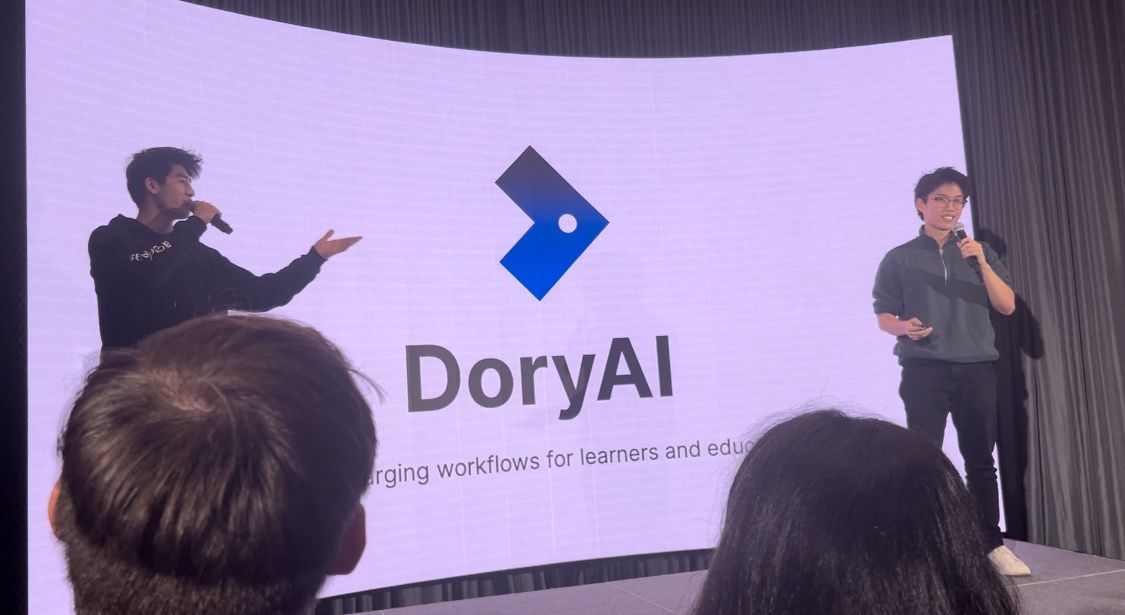
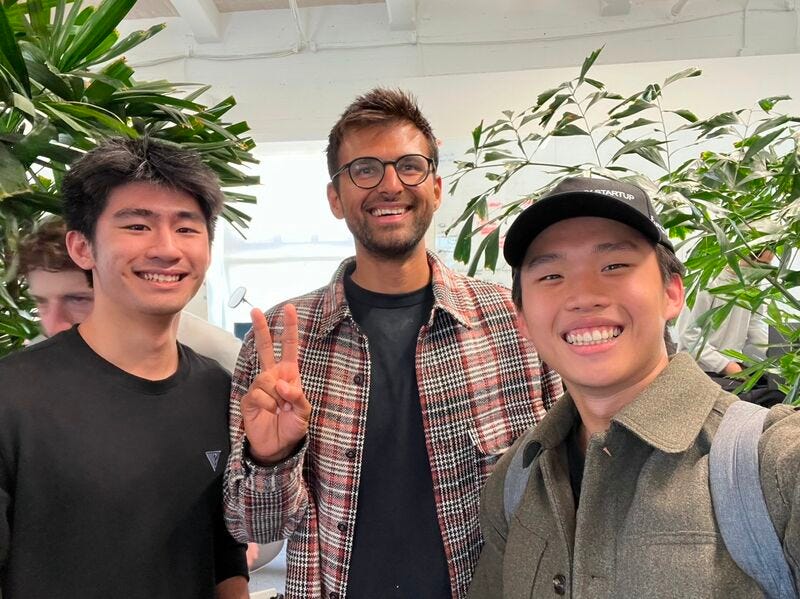
Spending the day with Pete, I asked if being in SF prompted him to move there. Quite possibly every founder I've spoken to says SF is a move you just have to make. Unsurprisingly I was given a flat no. Yes he met some of the coolest people building right now. These are the kind of people you would've watched on Youtube or on podcasts. I'm actually a big Farza fan myself and watch his videos all the time.3 But Pete's focus is on building, not networking. SF is a place where a lot of people get caught up in trying to meet a lot of people which ends up distracting them from building cool companies.
"If you just build cool shit, then cool people will be attracted to you."
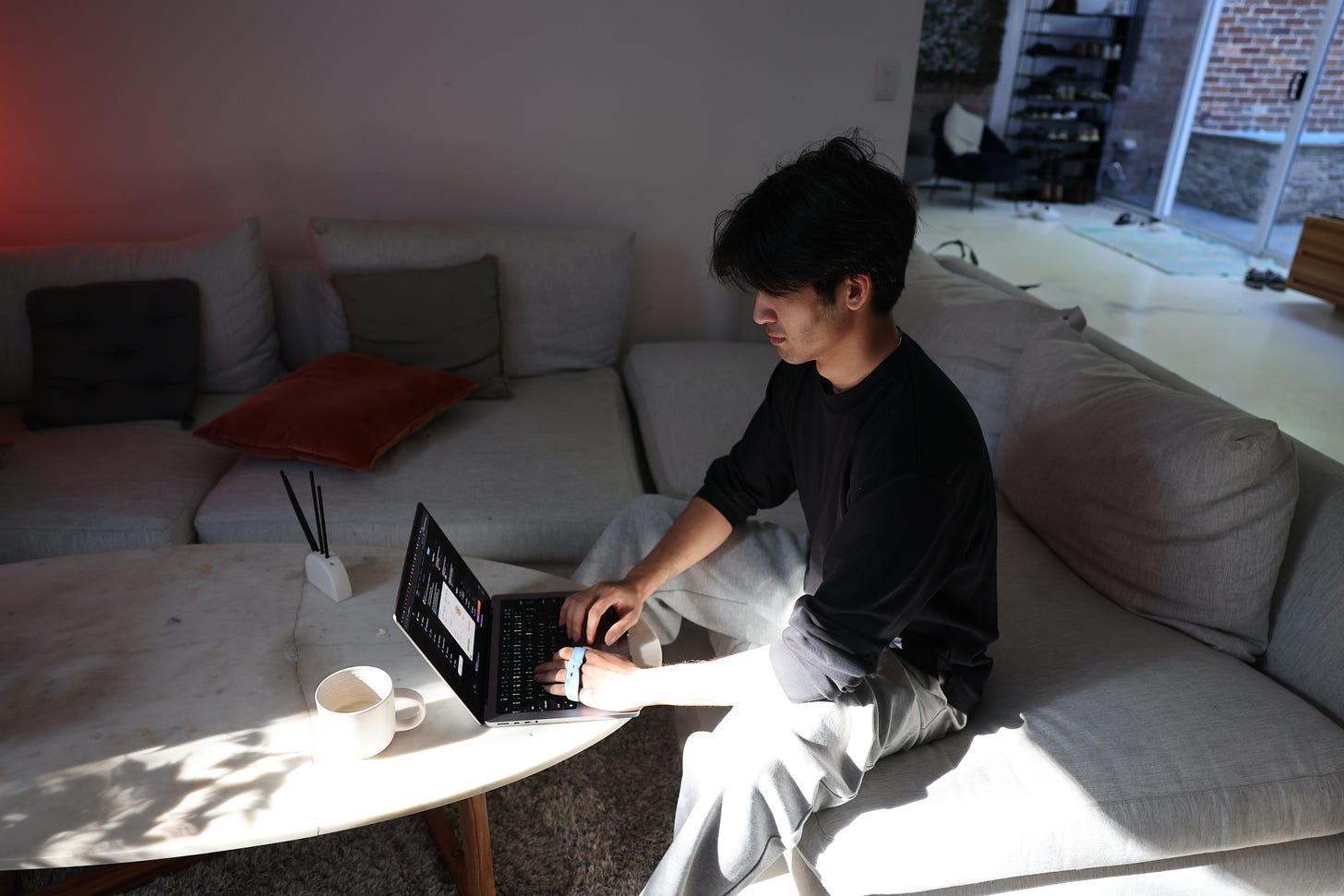
Coming off the highs of DoryAI, it was back to building new things after its exit. Lots of tinkering with new ideas and sharing findings on X. One tweet that ended up going viral was Reelify — a Tiktok posting algorithm Pete designed. 100K views and thousands of DMs later, Unrot's co-founding team had made first contact. One of those DMs came from an interesting builder from Germany. They hopped on a call and started building that same week. If Pete didn't strike you as someone true to his word, he'd surprise you pretty fast. The guy who dismisses networking built his most important professional relationship by posting something on the internet and seeing who showed up. Build cool things and watch people come to you, right?
Move slow to go fast
One thing I picked up pretty fast during our chat was that Pete tended to find his best creations from solving his own problems. Scrolling social media just happened to be the next problem after figuring out how to study better for uni.
"I scroll a lot. I'm Gen Z. It's like a founder-product match where I don't really have to be in their shoes because I am them. It's kinda very fortunate."
They parked four-figures on 10 mascot designs and spent 4-6 months on onboarding & design flows. They obsessed over user experience. When I first heard this I felt like this was a bit of an odd move for Pete. DoryAI grew to 30K users and sold in 5 months. To compare DoryAI's 5-month exit vs. Unrot's 6-month build before launch, it's a pretty big difference. This time he moved a lot slower and with a lot more intention. It's honestly a refreshing sight to see with the sheer amount of slop being produced nowadays. There's 2 million projects launching every day and they all look the same. But not Unrot. A lot of the intentionality was poured into design. With every venture he's pursued, design has been his craft. Yes, he learnt to code from age ten but writing lines of code never gave him that eureka moment. It always came down to design. Pete ended up designing hundreds of Figma flows ideating on how this app would function and how users would be drawn in.
"If you start slim, there's not a lot of clarity. But if you go through all permutations, you're like — okay, we can keep this, we can throw this away. Then the final product will be very streamlined, while not missing key capabilities, because you've thought about everything already."
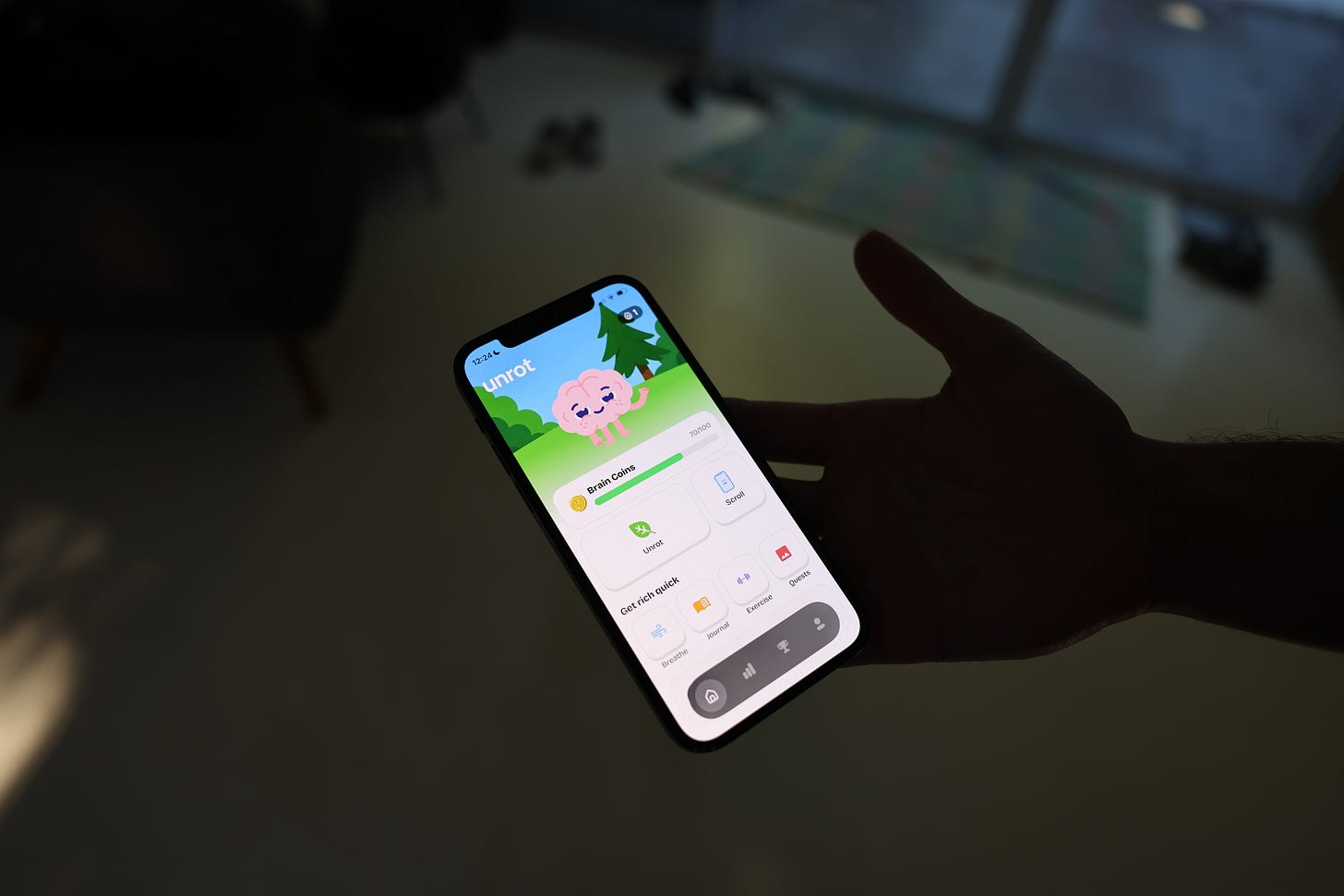
I was honestly surprised with how granular the decision-making was for even the simplest flows. I think that's why Unrot has grown so big in the first place. It's been designed completely around how the user would operate. Thousands of permutations considered and refined to be exactly right for a specific person. Unrot's onboarding flows are probably its biggest differentiator compared to other apps.
"We spend probably 80% of our time building the onboarding, not the actual product. You have three to five minutes to convince a new user why your product is a no-brainer for them. That's what onboarding does — it controls the narrative."
Some people see Pete's story and think wow that's insanely lucky. Capitalising on a growing trend (anti doom-scrolling) and scaling incredibly fast. But the origins of Unrot reveal this was a highly intentional and slow payoff bet. He's not an outsider diagnosing Gen Z's attention problem. He's a patient who built his own rehab centre. Getting to the app-store cost over six months of time and thousands of revisions. Scaling in the first few months was slow. They fought hard to weather the storm in the early months, where there was little trust and no reason for users to convert yet. As the months went on, the exponential growth the Unrot team believed in, came through. They smashed their six-figure target in a couple months and started to move the goal post further and further. Pete's current goal post is set at seven-figures per month.
"Our thing with Unrot is we basically say — scrolling is not bad. You've tried 50 apps like Opal that restrict you from scrolling, that punish you. But punishment doesn't work. With our app, we're saying scrolling's fine as long as you earn it. We give them a way out."
Take big swings
I asked Pete what principles were important to him that allowed him to reach his potential.
"My main thing with my parents is that they instil a culture of having freedom. Whereas other Vietnamese kids, their parents think very differently — they're super close minded. You gotta be a lawyer or doctor. I don't think I'm smarter than other people. I just think it's mainly self belief, and not having shame in trying new things and failing."
That's probably the one thing that just hammers home when you talk to him. Success is self visualisation + being in the right environment. It's not enough to swing big, you also need to obsessively place yourself as someone who can do X instead of wants to do X. This is one trait that I'm now incorporating into my own life. It sounds a bit sappy on the surface — the kind of self manifestation you might find at a yoga retreat. But how can you attempt to build a 2M download app if you're not already envisioning yourself at 10M. It's kinda like what my parents used to teach me when I was studying for the HSC. If you aim for 80% you'll get 70%. If you aim for 100% you'll get somewhere in the 90s. Always aim higher than what's possible. Take big swings and have bigger aspirations. Put that mentality together with being in the right environments and you'll have the recipe to build something really impressive.
Sitting with Pete for the day, I kept waiting to feel like the smartest person had figured out some secret I hadn't. Instead what stuck with me was simpler and honestly a bit uncomfortable to admit: before 22, this guy shipped a study tool used by 30,000 people, sold a company, lectured at one of Australia's top universities, and built an app 2 million people use to fight the thing they can't stop doing. None of that came from being smarter or better resourced than anyone else I've met. It came from him just not being ashamed to try. Watching him made me reconsider how much of my own hesitation — the ideas I've sat on, the things I've talked myself out of starting — were ever really about ability, versus just being too precious about looking foolish.
Give Pete a follow, trust me it's worth it. Find Pete at @supitspete and Unrot at unrot.com.
1 Pete and Jack on the infamous scooter seen above.
2 Two locations of Arrayah.
3 Pictured in the image above. Founder of Buildspace.
Get new pieces in your inbox.
Subscribe