
I first saw Shyeon, he was one of the many graduates, eyes brimming with determination and awe of the senior executives talking about the future of payments. When it was my turn to talk, as a "senior" with a year of corporate fatigue already weighing on me, I wouldn't say I necessarily noticed him in the room. Perhaps that was the first time I ever underestimated him. Shyeon's journey is one of entrepreneurial lineage, unbridled resilience and the forming of a partnership up there with the greatest "friends turned founders" stories.
I first heard of Puralink, a few months into my 2nd year at Mastercard, when I stumbled into an interesting group conversation. Shyeon included of course. Instantly he became the most interesting guy in the company, the only one building a robotics startup on the side. We'd bond with the rest of the team about our weekends as usual, yet I always felt Shyeon had something hidden. Turns out, his weekend wasn't as mundane as ours. Shyeon was quietly coming off long nights working at the lab, often spending the night there. He never stopped moving forward. Never slowing even when juggling a million things. I ended up attending the Startmate demo day with the Puralink team, the year before they got selected to go. On that day Shyeon set a timer that would run until they got their own Startmate offer. On the day they got the news, he stopped the timer. A week later Shyeon quit Mastercard. When he told me this news I was actually giddy. This guy is going places, I thought to myself. Perhaps I was just excited another mate was leaving the corporate world in favour of more adventurous pastures (I was also leaving around this time to join the Earlywork team). Being on the inside had that feeling of playground secrets being whispered around school. It felt great being part of the inner circle before the news broke out. On the schoolground it was usually the latest gossip of someone's crush. In the office room it was 100K offers and the promise of a life-changing opportunity.
An invisible city
Puralink is building autonomous pipe inspection robots. These robots function autonomously, infiltrating pipes and inspecting even the most complex pipe networks. The data collected is fed back to teams and asset owners to make more informed decisions. In 2019, Harry (CEO of Puralink) was trotting along on his early morning commute where he walked by a spouting water main. You would think with all our infrastructure it would be a simple fix. Harry thought so too. Only when he looked back days later, a team had dug up the entire street. Water lost, time wasted, personnel used up when they could be elsewhere. That was the day it clicked for him that there should be a better way. So like the robotics nerd he is (I truly say that as a compliment), he tinkered with this thought for years. It started as a project at university, where he developed a very arbitrary early version of the Ferret.
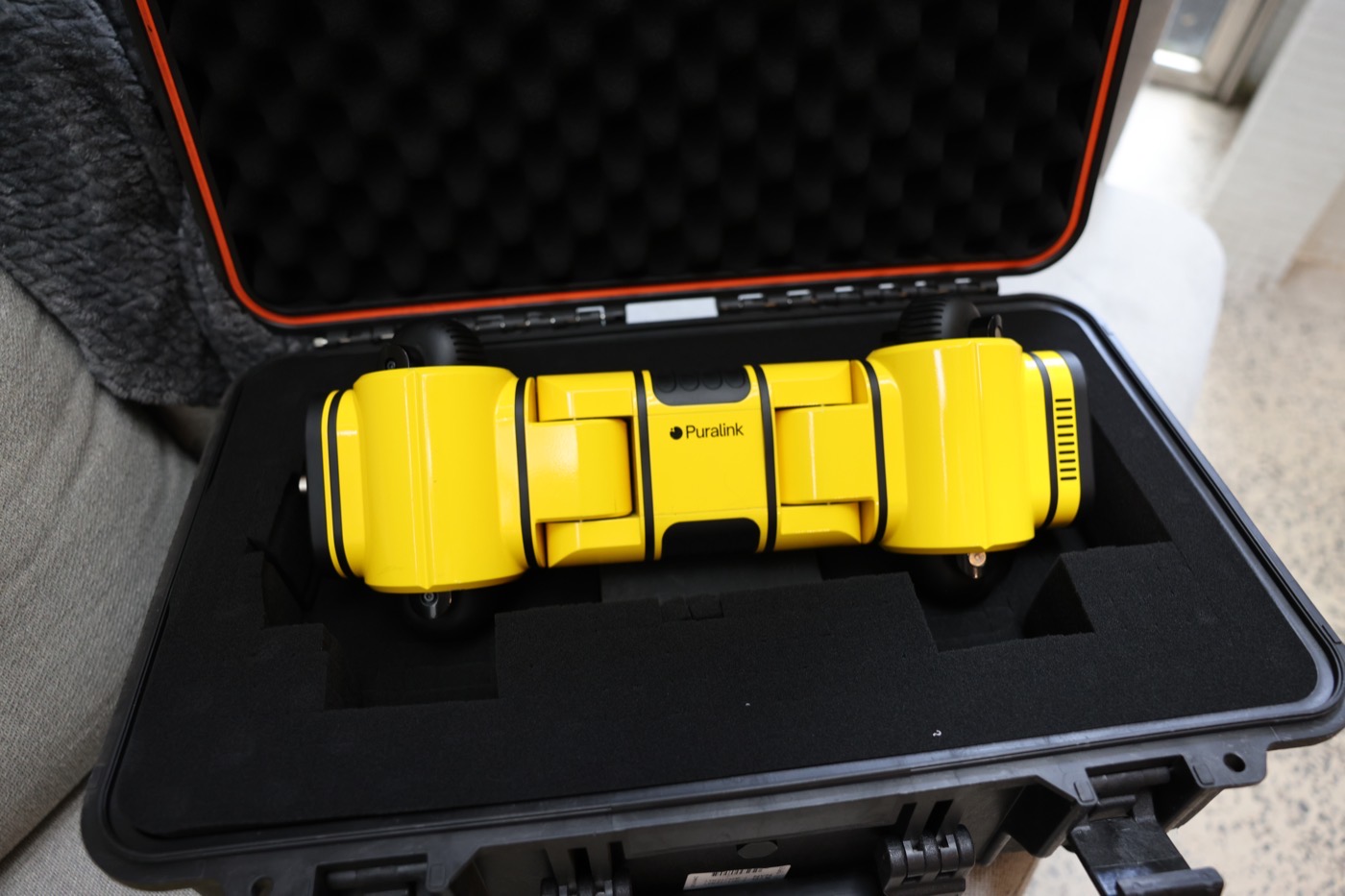
Harry took that experience to his internship at AWS where he met Shyeon. By chance they clicked at orientation day simply because Shyeon thought he was approachable given they both had tattoos.
"I remember walking around and seeing Harry. Saw he had a tattoo on his arm. I said to myself, oh he's got a tattoo, he can't be that bad."
Probably one of the more odd reasons for a meet-cute I've heard about. But no doubt it worked a charm. That day kicked it off. When they were put on the same project together, fate had already begun to spin its wheels. Ultimately, I think Harry's obsession is what drew Shyeon in, turning them into lifelong friends and business partners by the end of internship. It's no secret some of the greatest companies in the world came from friendships. Airbnb started off as classmates turned roommates turned co-founders. I see Puralink as one of those great stories in years to come. I've only met both of them together a handful of times, yet their yin and yang energy is prominent. Hell, if I also spoke to my co-founder 7 days a week for hours on end, you would hope you like the guy. That energy floats around in their office too. Their CTO, Long, sleeps upstairs on the top floor. Rumours say he's never left this building since their arrival. Shyeon jokes they had to have an intervention to get him to touch some grass. I love this energy. It's very startup 101 with all the cool parts.
"The days where I'm at 70%, Harry's at 130. The days where he's at 70% and I'm at 130. And there'll be days when we're both flat, and then Long's doing 300%."
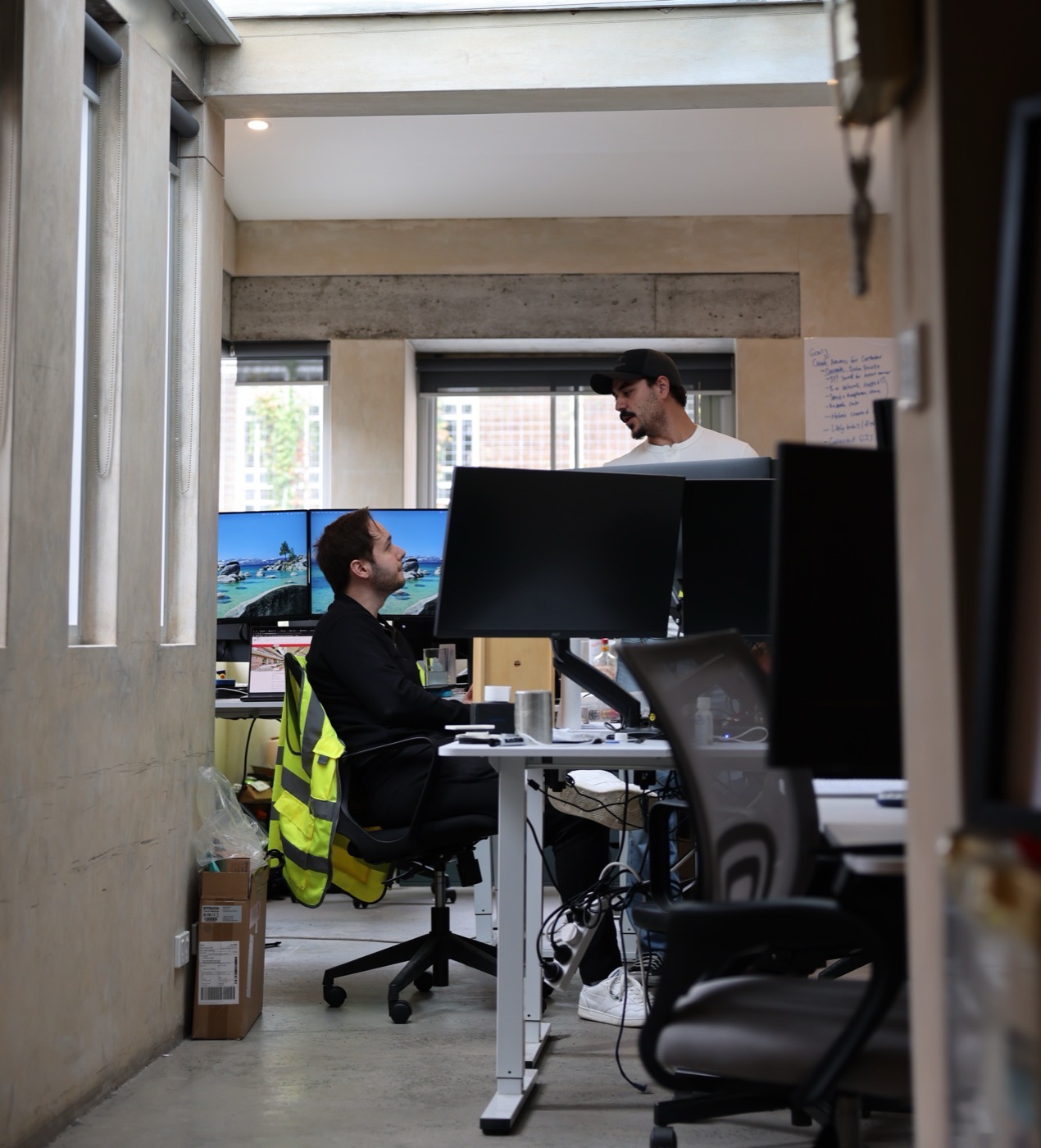
I think of Puralink as solving a problem for an invisible city. There's a whole network of interconnecting systems beneath our feet, and most people are completely unaware. I mean, why would we be? It's not part of our routine. It's an inherently invisible problem. I asked Shyeon if he feels like an odd one out at startup events, being one of the few guys not building "AI Agents for [Insert X here]". Shyeon says if he was going to work on something it had to have a huge impact. He didn't want to be solving for something that only impacted one vertical. And while what he does is extremely niche in its own right — physical hardware, robotics, underground piping — it impacts everyone. Puralink is building the robots that stop the whole street getting turned upside down. There's a huge flow-on effect, from the clients themselves, to their own clients and to the people who walk over the land where autonomous robots are doing all the heavy lifting. That's something special.
Employee #1
Shyeon comes from an entrepreneurial family. Both his mum and dad founded many businesses. From the fruit shop to an essential oils business, Shyeon's parents blitzed across the US with entrepreneurial spirit and an extreme work ethic. Some businesses were successful, some were not. Being the first hire for a wide range of businesses, at the age of 10–15 years old, no doubt the hardest life lessons of entrepreneurship were drilled into him at a very young age. At this age I was probably getting stuck into my algebra worksheet, scribbling away half-baked answers before watching cartoons after school. Shyeon's life was much different. He told me a common occurrence was getting asked to go to the principal's office by his teacher. Shyeon would sit there wondering what kind of trouble he's gotten himself into. Turns out he's been pulled out of class to run a tradeshow across the country in Arizona-Phoenix with his parents. Dad's already left. Mum's come to pick him up to follow behind. That's just how he grew up. Perhaps the most interesting learning, he tells me, was that the failures taught him more about entrepreneurship than the successes. Whilst overall good in business, a few bad deals steered the family in a more arduous direction. Shyeon tells me that the hard work, ambiguity and such weren't the most scary to experience, but rather how a couple of bad deals can stifle your progress. Reflecting back, there are many things he says his parents could have done better at the time. At this early age, Shyeon knew that where real work comes from is a lot of responsibility and high agency. Hard work is in his blood. Being in an environment that put that to the test is what really mattered to him.
Shyeon's childhood is one of trials and tribulations in business. He saw firsthand how high the stakes were when going all in on something. His family's entrepreneurial journey was full of wins, but the losses hit hard too. At a young age, Shyeon had a front row seat to both. It shaped something in him early. Most kids his age were worrying about homework. Shyeon was watching his family navigate the real consequences of swinging big and missing. Through it all, Australia kept calling. The family had tried to make the move multiple times. Once Dad found a job but Mum got cold feet, the next time it was the other way around. Something had to change. Shyeon was that change. His age was the only thing teenage about him. "I told Mom, I'm not going back to school in September. I'm moving to Australia." A decision most grown men would second-guess. If he went, his Mum would go. If Mum went, Dad would follow. At around 15 years of age, they moved.
Entrepreneurship has a funny way of teaching you about life that no other field can. Its brutality is immense, yet so are the rewards of experience and character you carry out on the other side. Shyeon was full of character at 15, as he is today. I believe that is what makes him one of the founders to watch in Australia. He isn't someone who yields under pressure. He makes the tough call and follows through. He always has.
As a whole it's easier than ever to build with all the AI tools. Shyeon remarks that because of how easy it is to get from 0 to 1, it's easier to fail and give up when it doesn't work out. Most founders are building, realising it's hard as hell, and falling back. But the founders that stick through can go toe-to-toe with the best founders in the world. Harry and Shyeon ate a lot of shit and did a lot of hard yards before getting their first yes. They shouted at the wind. Built layer on layer. Tried for programs, lost them at the last minute for unrelated bureaucracy that was out of their hands. One US program they were a finalist for had a bad experience with an Aussie and decided to revoke Puralink's acceptance. They ate a ton of shit (did I mention that?). For so long they were yelling at the top of their lungs "Look at me, I'm building cool shit over here". No one gave a damn at the time. Despite this they continued to battle against the odds and fight tooth and nail. In the Startmate program this fighting spirit was intensified with a spotlight put on it.
"We locked ourselves in a room... I was cold calling, I was LinkedIn messaging, I was texting, I was emailing 3,000 people just trying to see who would give us money first. And who would let us put a robot in their pipes."
Now they're one of the most resilient teams I've seen. Aussie founders need incredible resilience. It's hard to get capital, hard to get a yes, hard to break through. You've got to be a fighter. Shyeon backs Aussie founders to be pound-4-pound, the best fighters in the world.
In 10 years' time, where does Shyeon think he'll be? Shyeon wants to build a better world. He's building infrastructure for an invisible city. An invisible city that lifts up the world, all by itself. Even today, Shyeon was showing me how they're focused on modularity in the design, so the Ferret can adapt to more challenges faced inside the pipes. Manoeuvre better, offload independently and become the do-it-all robot — without a person's intervention. Shyeon's dream for the future is an admirable one. It's one where you want to help him succeed, it makes you want to extend a hand to help push it forward.
"I need to see that I'm creating good, doing something good."
He's got an intense belief in himself and his team. Shyeon says it's the people around him that raise that belief up, especially Harry and Long. I think it's been ingrained in him since he was a boy. From the experiences he lived through, from what his eyes have witnessed, watching his family raise themselves off their own merit. Shyeon's always been a fighter and dreamer at heart. As he says himself:
"I just believe it. As long as I'm fulfilling the rules of physics, I can do it. And even if I'm not, I still kinda think I can do it."
Give Shyeon a follow. Trust me on this one.
Get new pieces in your inbox.
Subscribe