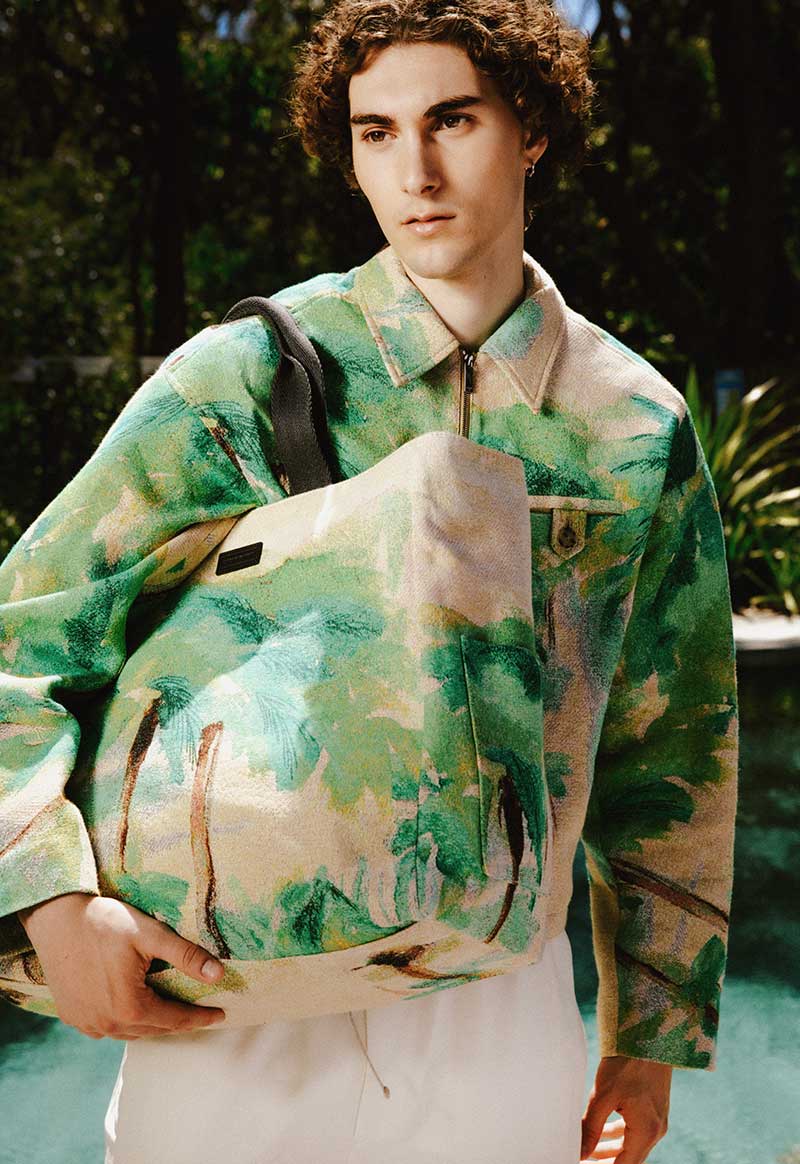
A few hours into my first day at Antler VC, I asked the obvious question, "so who are the founders I should meet right away?". Without missing a beat, the silence was broken by one name 'Harrison'. Who could he be? Some old-timer veteran in a grey suit running a tight team like an army general. A flip-flop wearing software engineer whose lack of dress code is more than made up for by his technical prowess. Stupidly, my first reaction was really the CEO of Harrison.AI, our neighbours in the office.1 Practically 10 minutes later, it was clearly neither of those exaggerated personas. In walks this tall guy, curly hair and dressed like a model from a youth magazine. He was a few years younger than me but it was clear he had a certain magnetism like no one else. I'd always get this feeling when talking with Harrison, he's somehow ahead of me in the conversation. Like he could be having two or three conversations at once to fill up the time between words. I think that's how I envision his brain operating. He's constantly iterating and reiterating in his head. He seems to fit the classic trope of being the guy who's always two moves ahead of you.
High performers generally have a power to translate skills over disciplines. Harrison's journey to becoming one of the most sought after founders in Australia, started in swimming. From the ages of six months all the way up to eighteen, he was in the water. Both his dad and grandfather were swimmers. Swimming was essential versus usually being an afterthought for most families. 60km on average per week, 4am wake-ups, six days a week. It's a demanding military-esque schedule. He went on to compete in nationals and progress to some of the highest peaks in adolescent swimming. It's no surprise this insane discipline carried within the family — his brother a national rower and the other a musician (French hornist at the conservatorium of music). Discipline and routine were present since he could float. Self-identity and mental health were much more harder to come by.
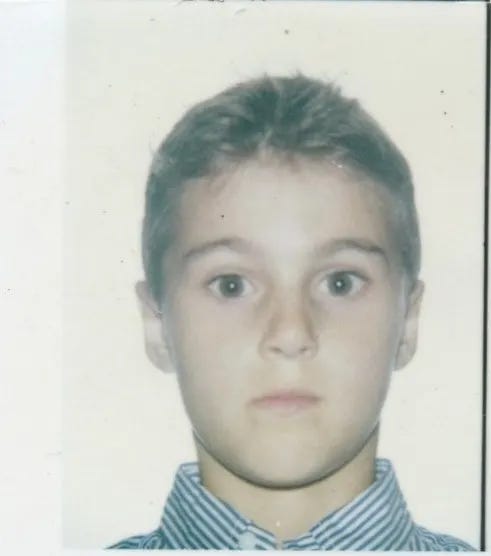
Being Harrison, Inc.
The biggest hurdle of young Harrison's life was mental health. "I think we were going through a bit of a transition where we moved from Sydney. I didn't really have many friends. I was trying to figure out what my identity was. I was studying at Shore and I got really lost in my identity of what I wanted." The remedies came in a list, the way they do when parents are frightened. Hypnotherapy. Psychotherapy. Psychology. Psychiatrists. A fifteen-year-old cycling through the whole directory, yet nothing seemed to stick with him. What finally worked wasn't a treatment but a person. A life-coach about fifteen years older. He was old enough to be listened to, young enough to be trusted, which for the eldest of three boys was a rare combination. Someone ahead of him on the road who could help him better navigate it. This life coach had two best friends, twins, who happened to be among the most sought-after models in the world — modelling for Tom Ford, judging Australia's next top model, shooting with Lady Gaga. He sent a photo of Harrison to one of them, Zach, who sent it on to IMG. At sixteen, the kid who couldn't figure out who he was, got scouted for a career built entirely on how he looked.
Modelling is rejection as a daily fact. In Harrison's case, he was battle hardened by veterans of the industry, who drilled one idea into him early: Harrison, it's a business.
"Where people get it wrong is that the brand didn't choose me because they don't like Harrison. It's not that. I am Harrison and my job is modelling. Not I am Harrison and I am a model."
Which is a strange message to hand a boy who, a year earlier, had been drowning precisely because he couldn't tell the difference between who he was and what he did. This helped redefine why he was or wasn't picked for certain opportunities. Kind of like a job interview, it's about finding the right fit on both sides. "They're just understanding if you fit their business needs. And thinking about it that way really reframed and allowed me to run my career like a business." Hearing Harrison talk about his modelling days reminded me of how he talks about running ReFresh. He treated himself as the business and ran it like a CEO. He used partners as strategic tools including how he worked with his agents and how they outreached to brands. He has an intense hunger where most of his peers were waiting for permission. Combined with the discipline developed over his athletic career, it makes complete sense that he went on to work with the top brands in the world.
25 Million People
Covid for many people was a time of inactivity, slowness and a period of time better forgotten. For others, it brought forward opportunity. I felt like there was a resurgence of amazing startup stories coming out of lockdown. Really Mental was one of those stories. "Really Mental started because my mate and I made a bet if we could get a podcast." I don't know how many times I've personally had a "we should start a podcast" conversation with mates. Harrison not only had that conversation but followed through on it.
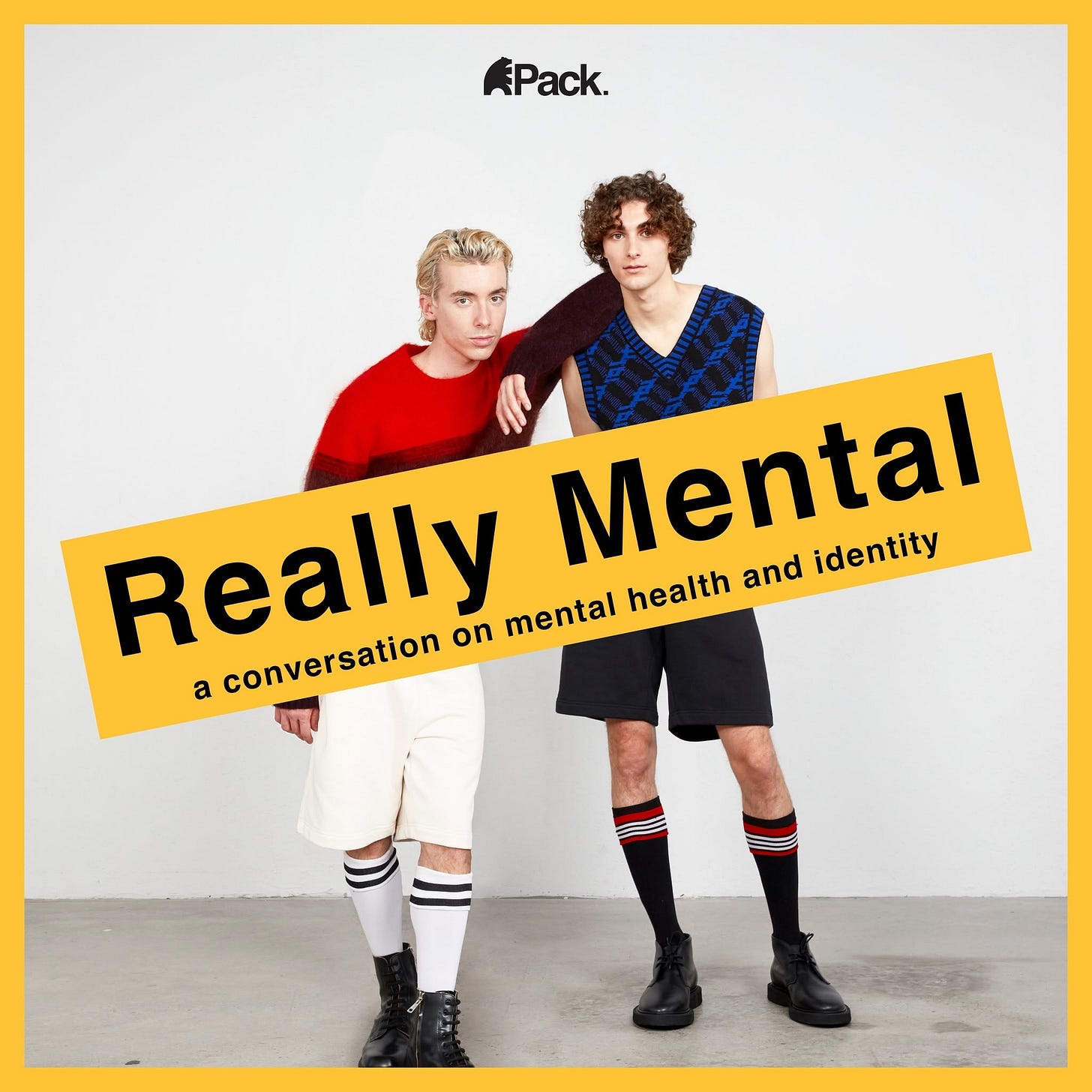
"I was catching up with a friend who was a musician, Will Hyde. We ended up having a chat on the phone and then we realised we chatted for three hours straight. And then he was like 'we should do a podcast' as like a joke. I was like, why not? And then we pitched it to a company called Pack, which got us a deal with Amazon."
It took 5 months to get from idea to working with Amazon. Really Mental marketed each episode by running Instagram live sessions with popular guests. This model allowed them to alert the millions of followers their guests had and push them into viewing the podcast. Over 25 million people tuned in to watch these two guys talk about mental health with all kinds of guests — therapists, neuroscientists, artists and creators. "During COVID a lot of my really close friends, especially my guy friends, were resorting to violence, alcohol, and drugs to deal with their loneliness during COVID. And I wanted to provide a safe space for young people to actually go and listen to their favourite celebrity, artist, person talk about how they were going truly and have vulnerable conversations." In all his experiences, exposure to demanding fields is a recurrent theme. Whether it was high-performance swimming, modelling, growing a podcast to 25 million people, or now building ReFresh.
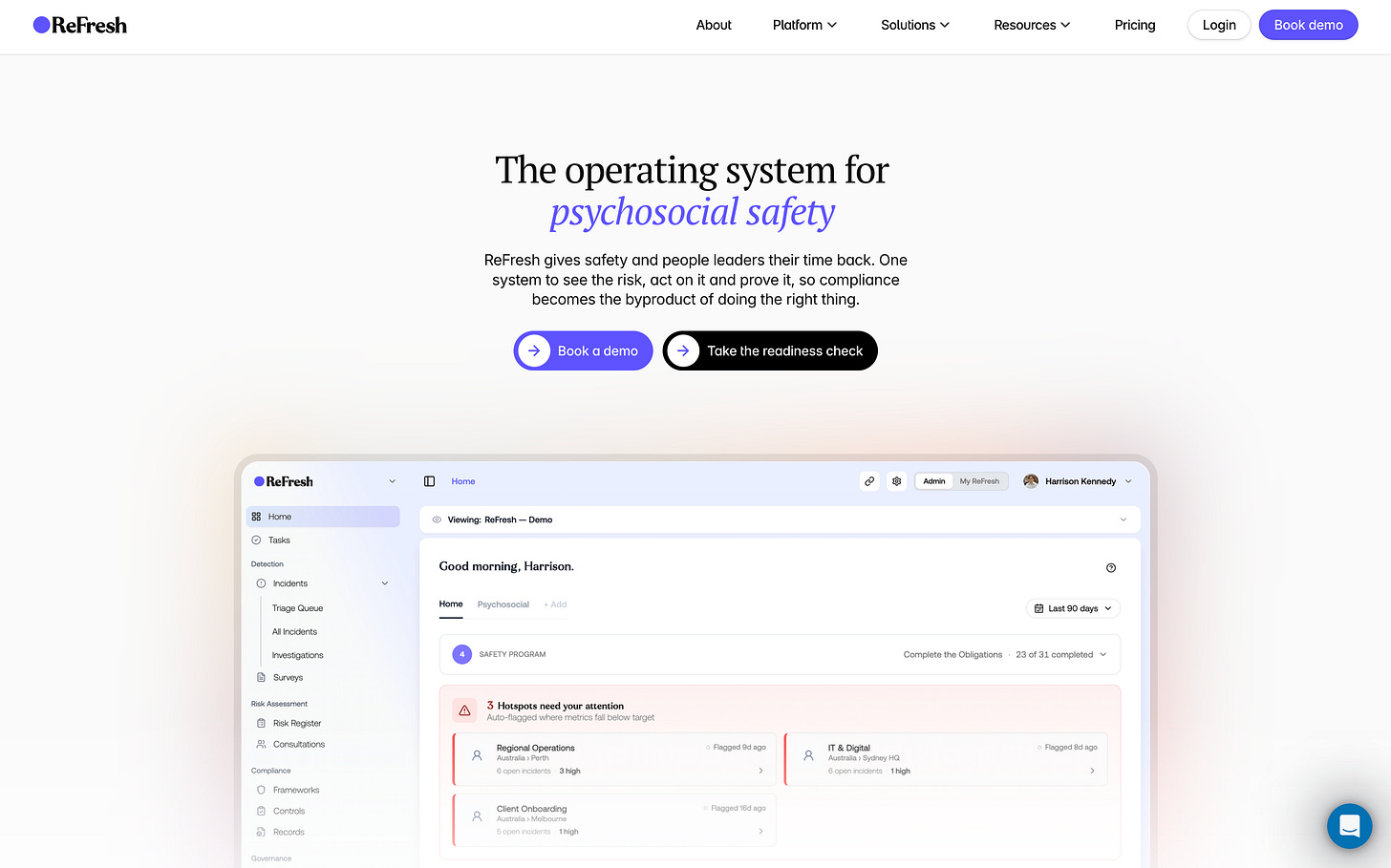
Like all good startups, version one of ReFresh looks nothing like its modern counterpart. Coming off a mental health podcast, Harrison originally wanted to build a wellbeing streaming service at scale. No one gave him money for an entire year. Perhaps an uninvestable domain at the time. Traction only started to pick up when Antler entered the fold. They felt there was something within Harrison they wanted to bet on. Antler's philosophy has always been marked by backing founders over ideas. Even if an idea was subpar, Antler bet on people they felt could pivot quickly and find their wedge. This was a bet that worked out. With less than 2 weeks left before the due diligence process, the entire business pivoted based off a survey Harrison didn't enjoy. "I really hated the survey. I didn't like it. So I thought about how do we automate that process — of not people having to take surveys anymore." They raised their pre-seed with Antler off the back of that before changing to what it is today — an end-to-end psychosocial safety system that allows you to identify, assess, control, and manage your safety overall.
"If companies don't have the right systems in place to make their people feel safer, they're not going to actually be able to:
1: be compliant
2: be operational and efficient
3: have a good workplace culture."
Why do I think this company is worth betting on? When I was chatting to Harrison I questioned him on the urgency of the problem they solve for. I challenged him on his business ironically the day after new updates were made to psychosocial codes of practice in NSW. What was once a nice-to-have corporate policy become a mandatory inclusion. Clients get audited on whether they've implemented policies according to the code of practice. ReFresh notified all their clients within hours and gave them a roadmap to be compliant. Weeks of headache, keeping up with the new changes and updating policy — addressed before they even knew there was a problem. There's power to that.
Being Two Moves Ahead
There's a moment from those first weeks at Antler that stuck with me. If Harrison needed to reach someone, he'd figure out how. A fifth-degree connection worked into a conversation. He would mention wanting to meet the CEO of a company one afternoon and had the meeting booked by the next. I kept trying to reverse-engineer the trick. Turns out there isn't one, or at least not the sort I was hoping for. "Be social. It sounds stupid," he told me. Go to events. Get the coffees. Ask people what they're working on and how you can help, and don't ask for anything back. The compounding effect does the rest. What got me was the inversion of it all. A 24-year-old sits down across from a CEO twice his age and leads with "how can I help you?" Nobody does that. He told me about an executive who came in just to check out ReFresh yet left asking for a deck and offering intros Harrison never chased. "All I did was prove my value to him straight away." The rest is delivery. Say things with confidence. Kill the maybes and the I-thinks. Mind your voice, your pace, your hands. And keep a live map of who knows whom running in your head, so the day you need a door opened, you already know whose to knock on.
Harrison is a one of a kind founder. He's not afraid to knock on anyone's door, no matter how high up he needs to go. I do not know how far ReFresh will go in its lifetime, but knowing who's at the helm — it's a bet I would gladly make. Harrison's ambition is to create a billion dollar company. It's no small feat. But if I could peer off in the future to see how ReFresh can change in the world — I would say it's in a better place. "We want to make every workplace have the right systems for people to feel safe. We believe if people feel safe — you build a compliant workforce, you build a more efficient workforce, and you build a better workforce."
Give Harrison a follow. Trust me on this one.
1 The CEO of Harrison.ai is in fact not named Harrison.
Get new pieces in your inbox.
Subscribe