People say don't work with your friends or family. It drives a wedge in your personal relationships and forgoes the boundaries required to be good business partners. Or so I'm told. Lyra is proof that not all advice is sound advice. Two brothers, who've been embarking on entrepreneurial pursuits since teenagers, built a eight-figure product studio when most service-based businesses struggle to find their wedge in an increasingly 'we-can-do-it-ourselves' world.
The Dao brothers founder story didn't start in the services model but community. They earned their first $1,000 from running a Minecraft server in highschool. When Minecraft wasn't cool anymore, they built a new community in Clash of Clans. A top 50 clan in Australia and then clearing almost $50K from their server (Unturned). Nam thought big-picture and Anh kept it more grounded. This almost feels like a nod to Michael and Jim when they were co-managers but where Michael and Jim clashed, the brothers worked almost intuitively. It's like when the chemistry feels just right.
"We were both the co-owner — he was doing the business, and I was doing the community building... we've always had this dynamic of him being the CEO and I being the COO" says Anh.

Humble origins
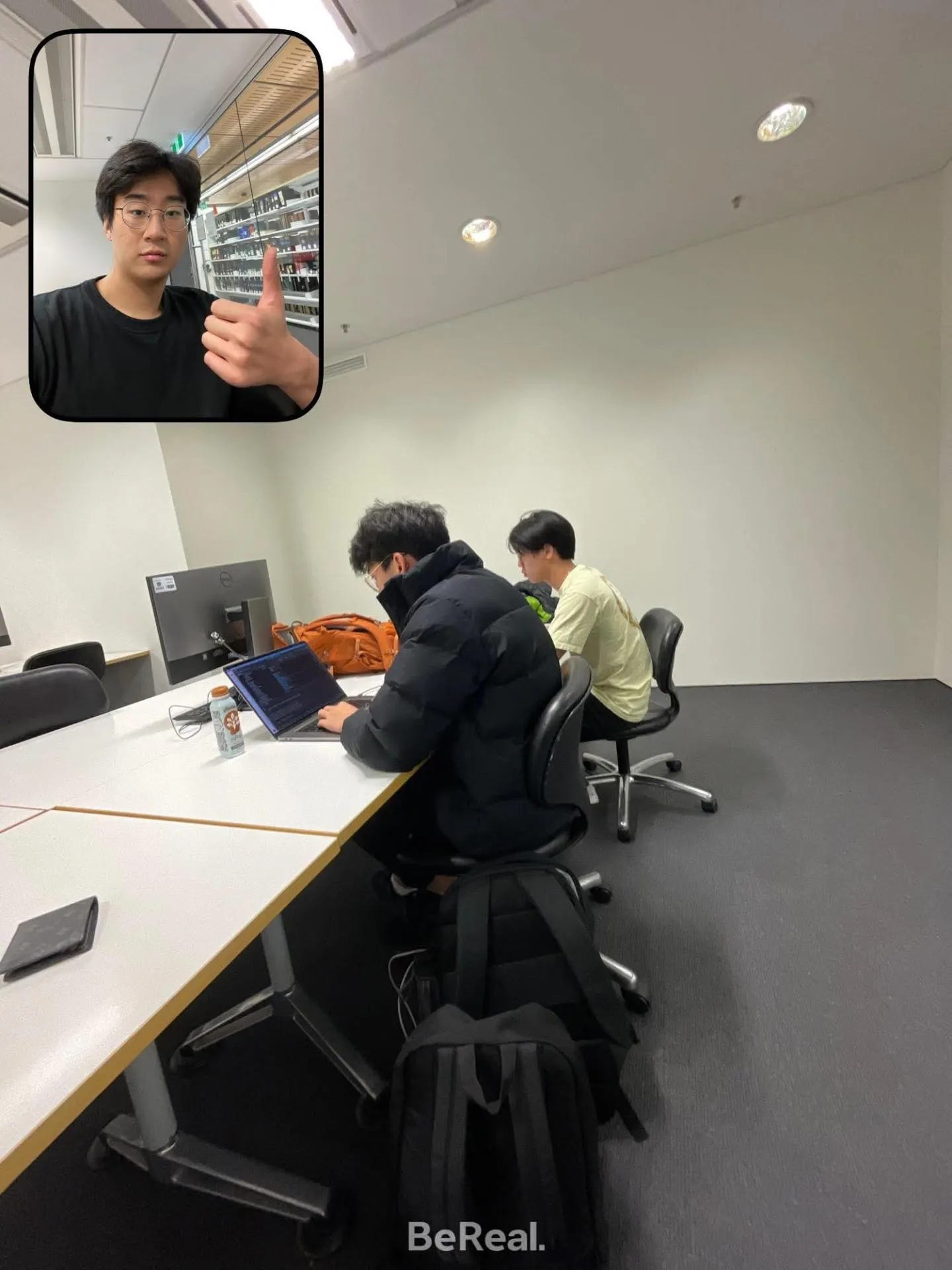
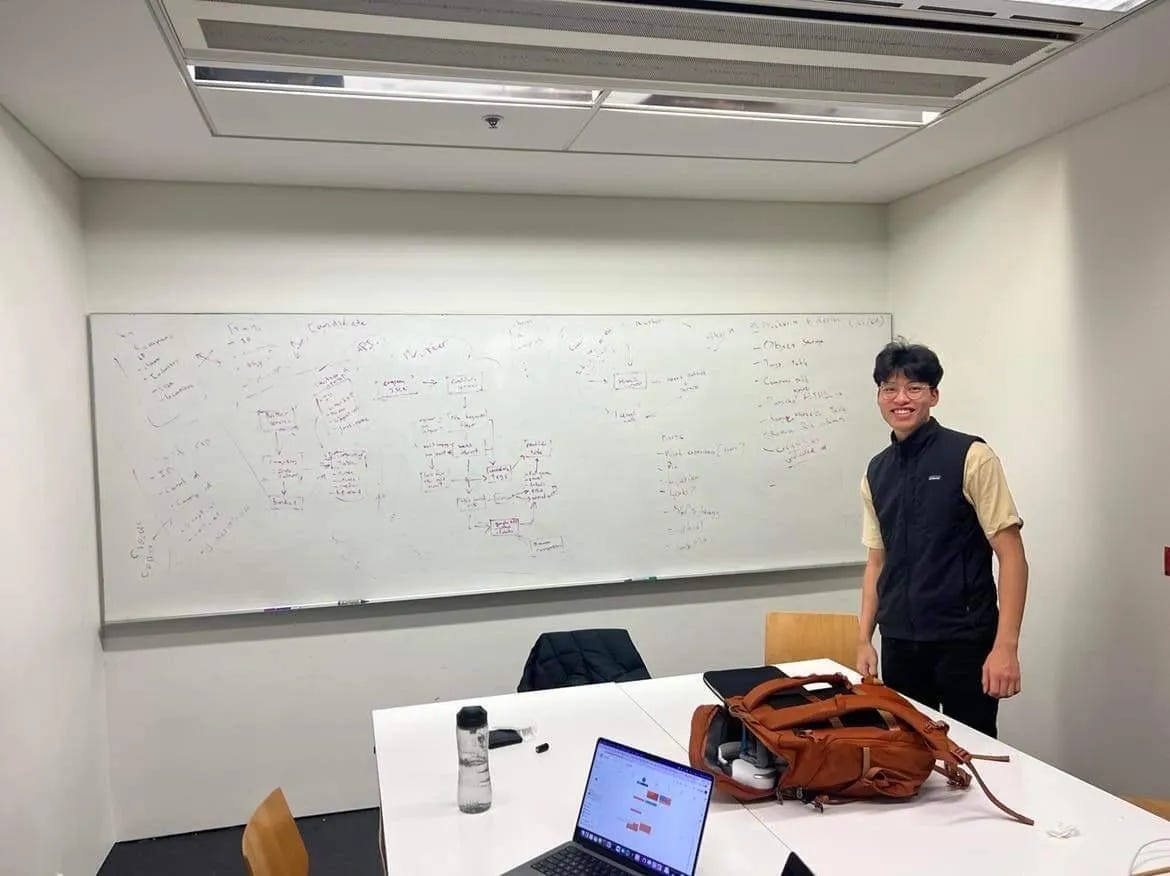
I tend to find successful founders are directly influenced by a role model from an early age. An entrepreneurial parent or a mentor they look up to. For both Anh and Nam, I wouldn't say there is any specific person here. Their father was a university lecturer in Japan for eight years, after migrating from Vietnam. Unimpressed with the shocking work culture in Japan, he advocated for his sons to grow up in a more positive albeit more laidback environment. Australia happened to tick all the boxes. Rather than pushing a prestigious pathway or a certain job description, the family philosophy was to be happy and healthy. Perhaps this gave Anh and Nam the creative freedom to do what they wanted. Minecraft was fun so they tried building something there. Every opportunity came from a deep passion or interest to build, not monetise. These were just two builders doing things they thought were cool. So when Nam's friends Jeff and John asked for coding help to solve a problem they were deeply interested in, it was a chain reaction to move. Nam knew the Paraform founders through university mutuals and got to work building the early version of their recruiting marketplace in the Fisher Law Library in USYD. This marked the earliest version of Lyra before it had a name.
>2% acceptance rate
If you're even remotely connected to Silicon Valley, you've heard someone talk about Lyra. Lyra has been taking over the SF scene helping the fastest-growing companies 10x their engineering feats. Their portfolio boasts an impressive stack of companies including Paraform, Lucent and countless other startups. But how does a company attract top-end clients when so many recruitment companies (even other YC startups) are all battling for the same market share?
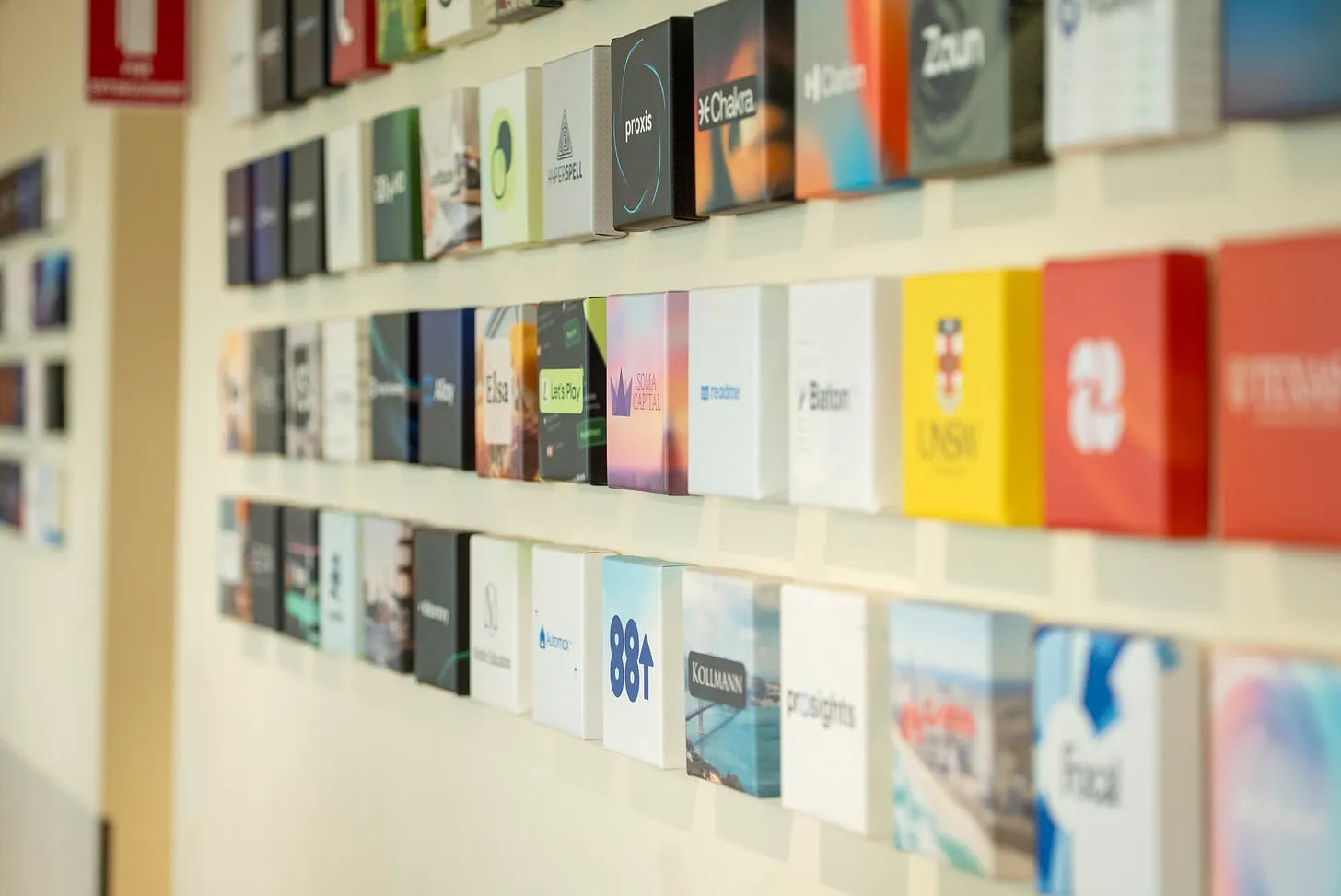
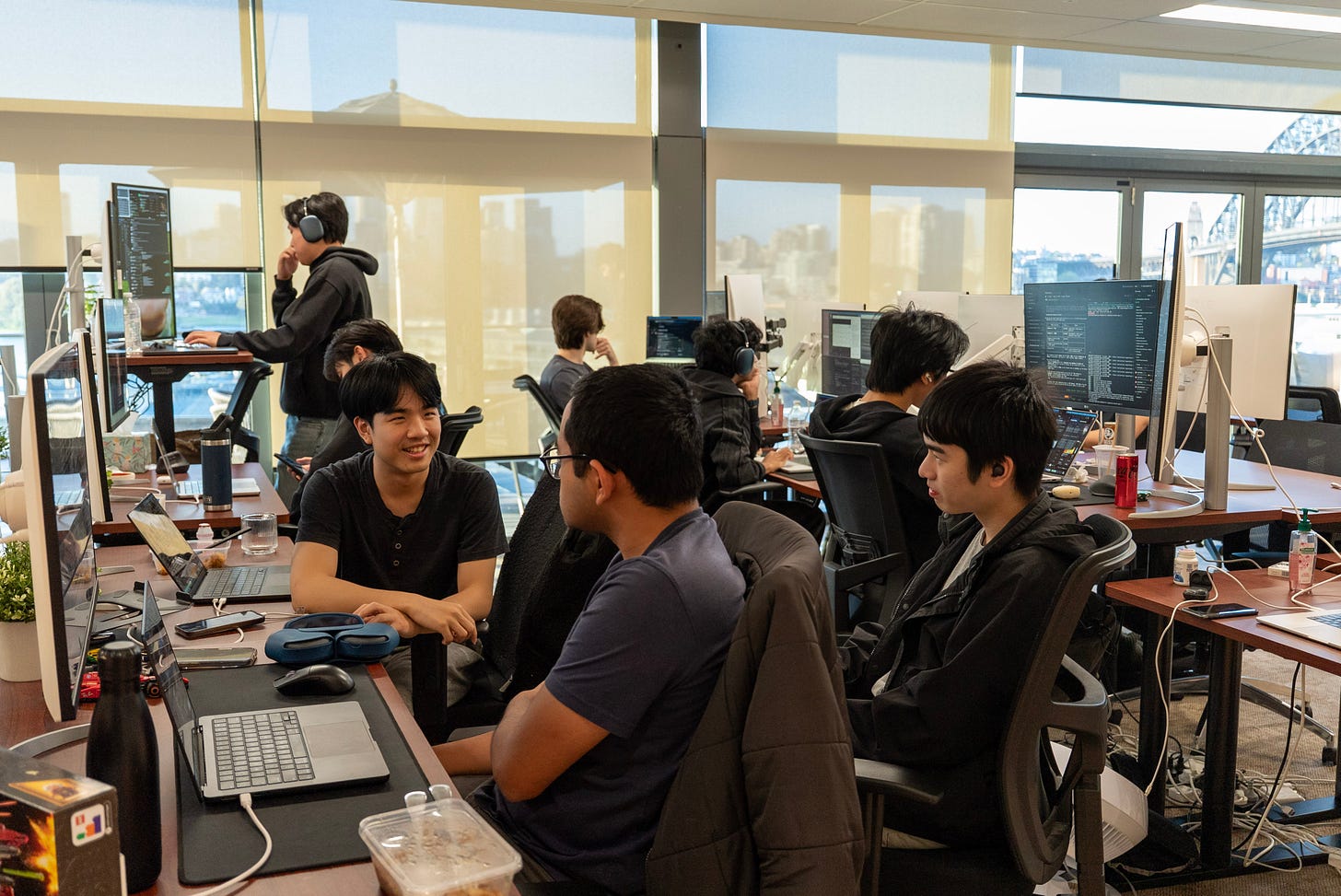
An unwavering bar for exceptional talent. Anh says Lyra had ~3,000 applicants over 3 years and they've accepted about 50 engineers. That's less than 2% acceptance rate, even lower than Ivy-league schools. Lyra's hiring philosophy is simple. Look for something exceptional that's difficult to replicate. All their engineers meet a minimum skill cap, which isn't that difficult to meet with todays talent. Yet hires have been previous Math olympiads, nationally ranked e-sports players or athletes. If you can be exceptional elsewhere, you can be exceptional here and get to the top 1% of engineers. These type of people are competitive and insanely driven. This is a far cry from their early days, where as in usual scrappy startup fashion, they hired whoever would give them a chance. Engineering friends or students they were able to convince to join them early on. Now they have the most exclusive talent network in ANZ. If I had to define the biggest superpower of both Anh and Nam — it's leveraging their network to its maximum. For 2.5 years their clients have been mostly inbound, all word-of-mouth, allowing them to exceed eight-figures ARR. Anh attributes this to exceeding on quality of work and letting the product almost market itself.
"I think products that are good doesn't need to be marketed. We've hit that level where our engineers and our quality of talent just kinda advertises itself."
Lyra 2.0
If you haven't checked LinkedIn in a while, Lyra has been changing how they approach growth. Lyra Capital has been ramping up, making sixteen investments in the past few months. What's worked really well is leveraging their unique network and investing in startups they already know intimately. After having countless touch-points from client work and seeing how all these founders operate, it naturally folded into an investment opportunity. Lyra's also been spinning up a new media arm tackling interesting stories about startups and operators.
"We're gonna become YC for Australia" says Anh.
That's a bold claim. After carving out their own section of Silicon Valley and building their reputation, it's now become a game of higher heights. What goes beyond forward deployed engineers? Forward deployed ecosystems. Helping startups not only get access to the right talent to accelerate their build, but also capital and distribution arms alongside that. Lyra is becoming an ecosystem provider helping the world's best startups grow exponentially.
"What makes a startup successful — it's capital, it's talent, it's distribution, and network. That's the four pillars, and where we come in."
The idea of a YC type equivalent in Australia talks to the level of ambitious people we truly have. There's a fallacy that Australia doesn't have the same talent as the US, but really they're simply harder to find and attract. Our future founders are being whisked away to already-overinflated banking institutions or consulting firms that do little for the world. Anh's no stranger to speaking his mind online especially when it comes to ambition and tall poppy syndrome.
Price of Ambition
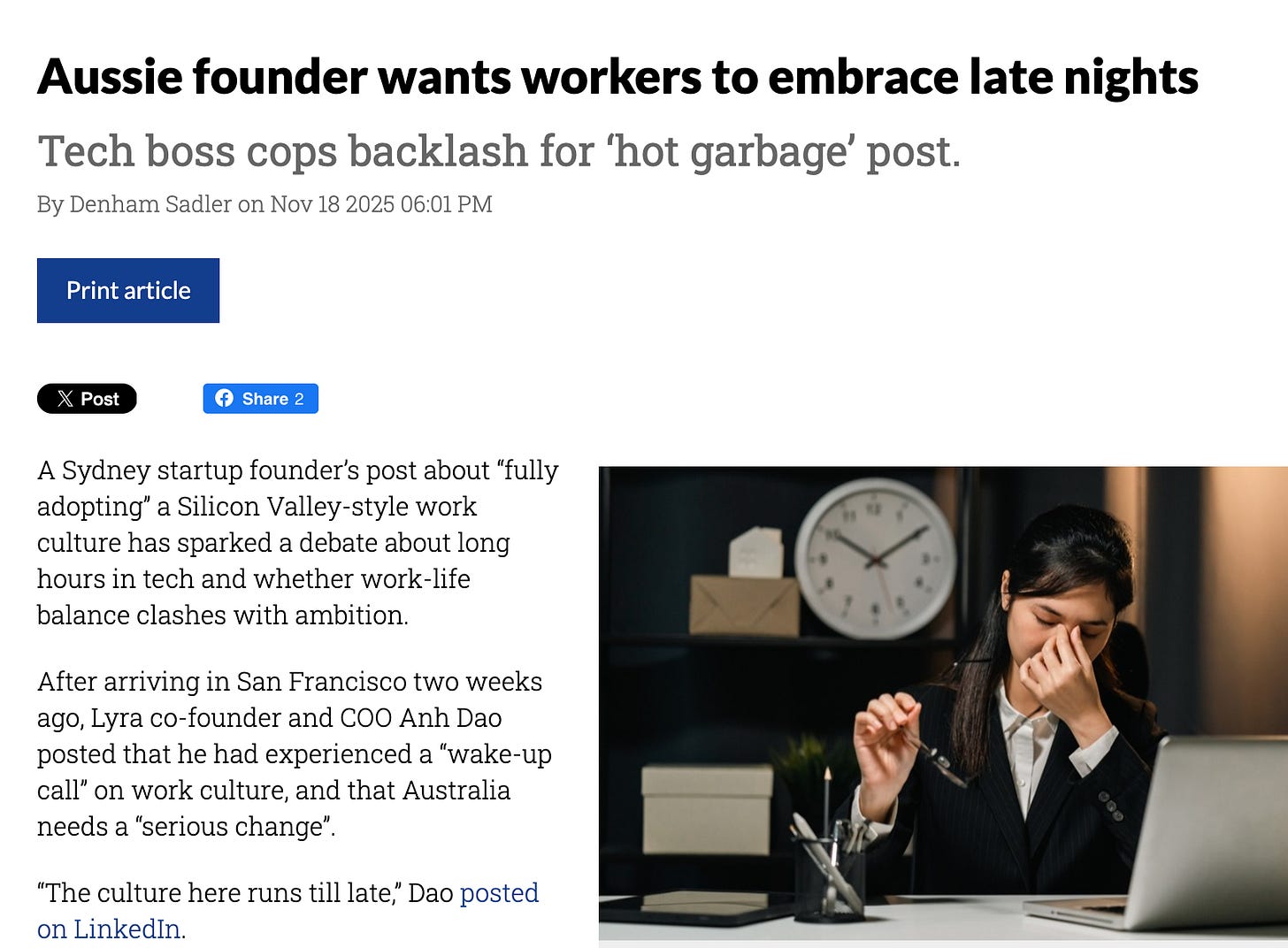
When I pressed him on how he felt during this backlash, it was pretty clear how he felt. Not regretful on the message but rather how it was communicated. Because the underlying message, Aussie founders need to compete with the same (if not more) stakes as the rest of world to succeed, is an indisputable truth. Anh's proud of the team he's built today and the byproduct is a team willing to work harder than any other company. To win from Aus, you need to work 2-3x harder than US. Capital is harder, talent is scarcer harder to find and growth doesn't have that exponential curve like in the US. It's like having to waddle through mud during a race where everyone else is running on smooth pavement.
One thing that spoke volumes about the culture Anh's built was how Lyra's employees weren't afraid to stand up for themselves. During my research I saw LinkedIn threads where random strangers were cracking down on 'working long hours' and 'pay gaps' and calling out Lyra's youngest employee for working insanely hard. But half the comments were just that employee defending the culture he loved. He spoke about how being ambitious is his own trait and working hard is both incredibly fun and rewarding. This is someone who wants to be in the top 1% of his field. Lyra attracts people who want to win. That's the difference between people inside the company and those who are just bystanders. Because people will judge you regardless. Whether you're working too hard or not hard enough. Anh's takeaway:
"Ambition has to come from oneself... if you force it onto someone, they'll react defensively"
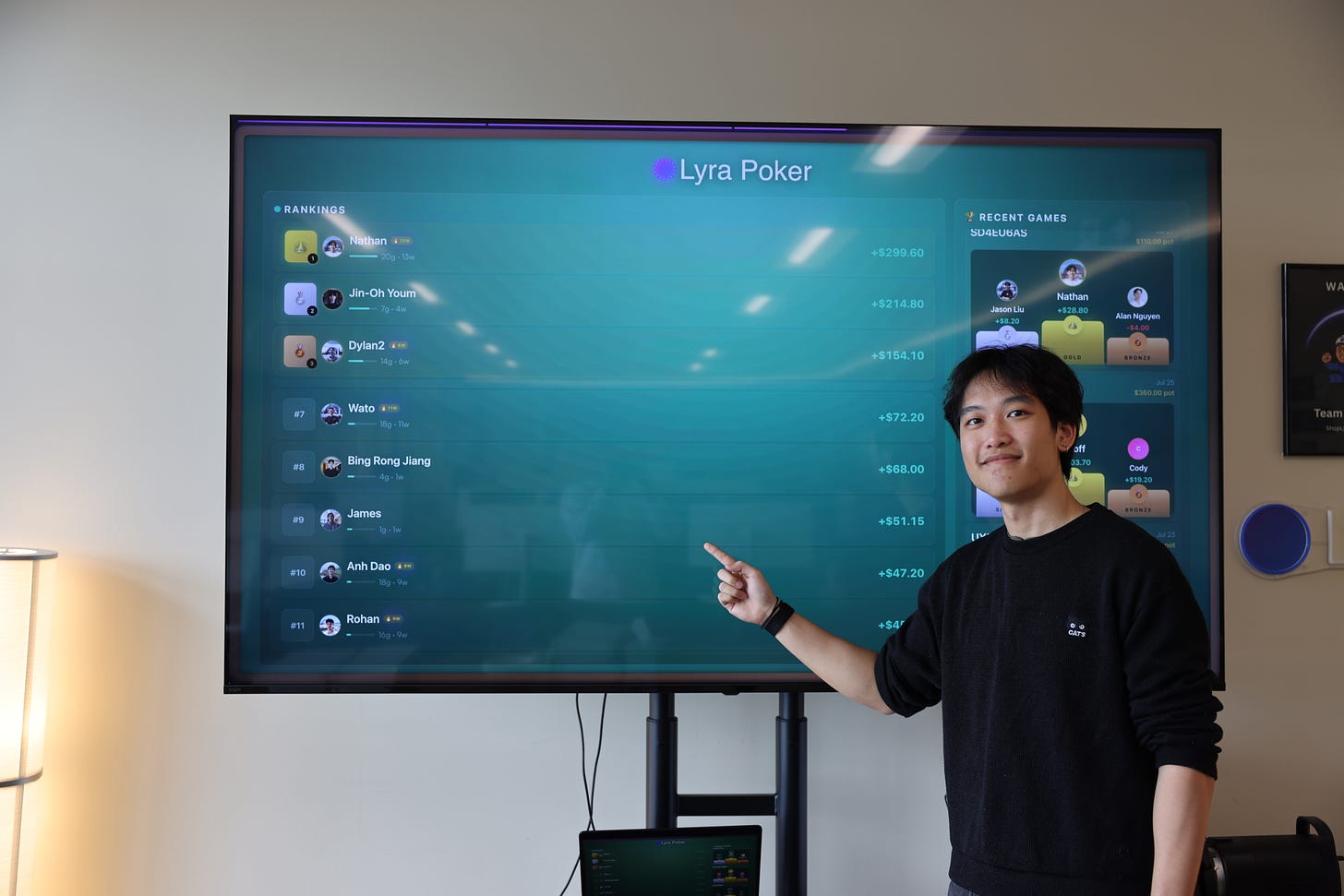
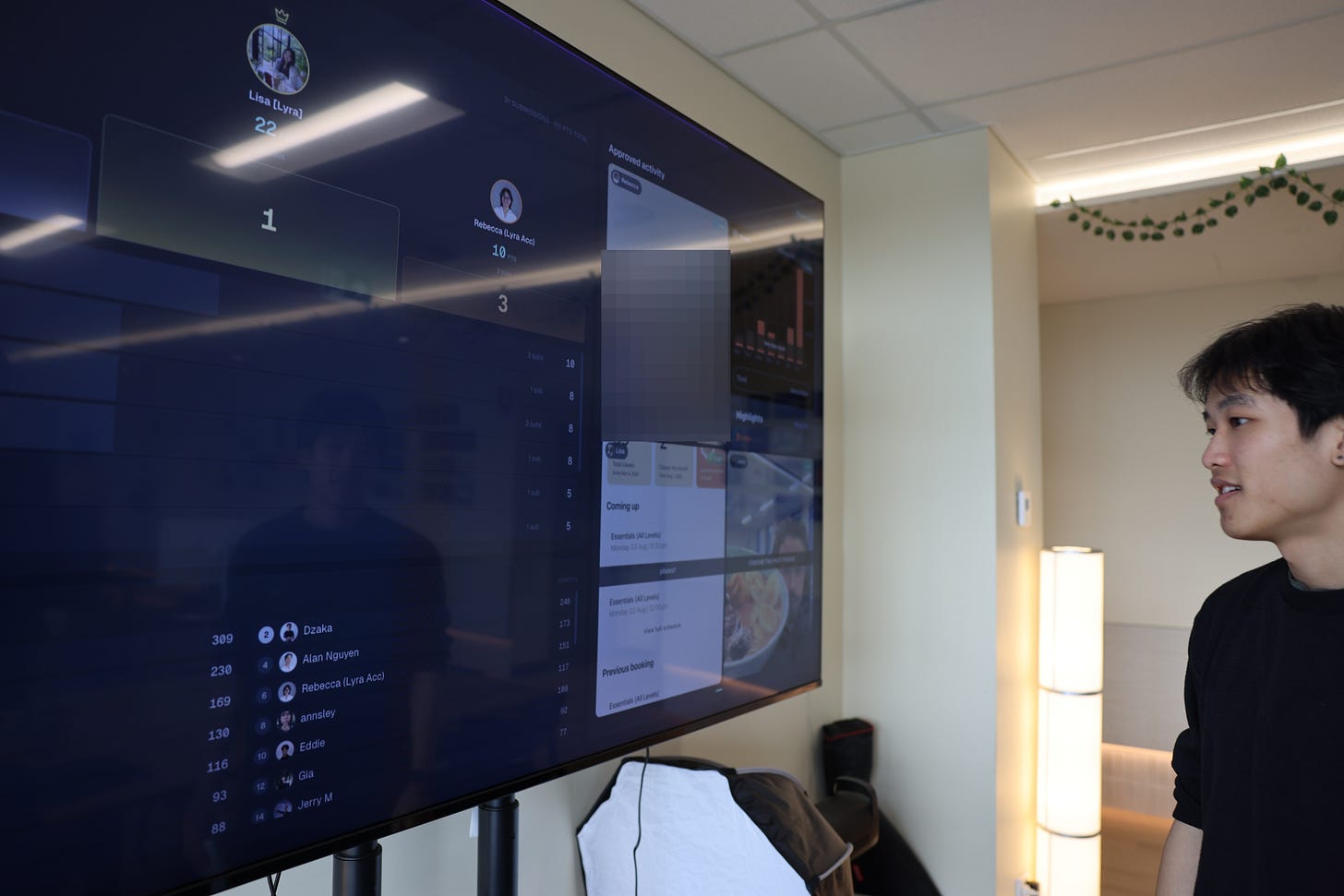
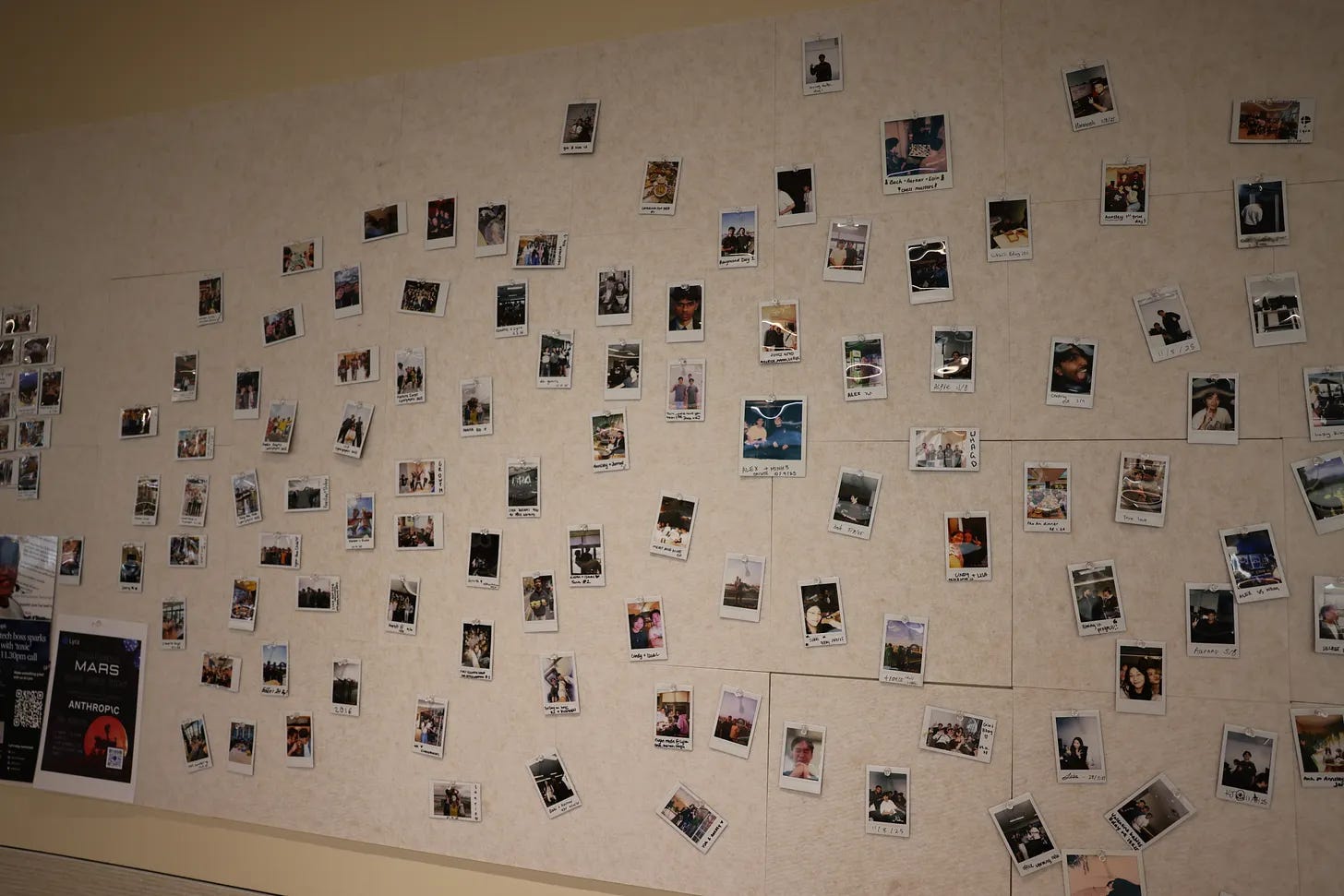
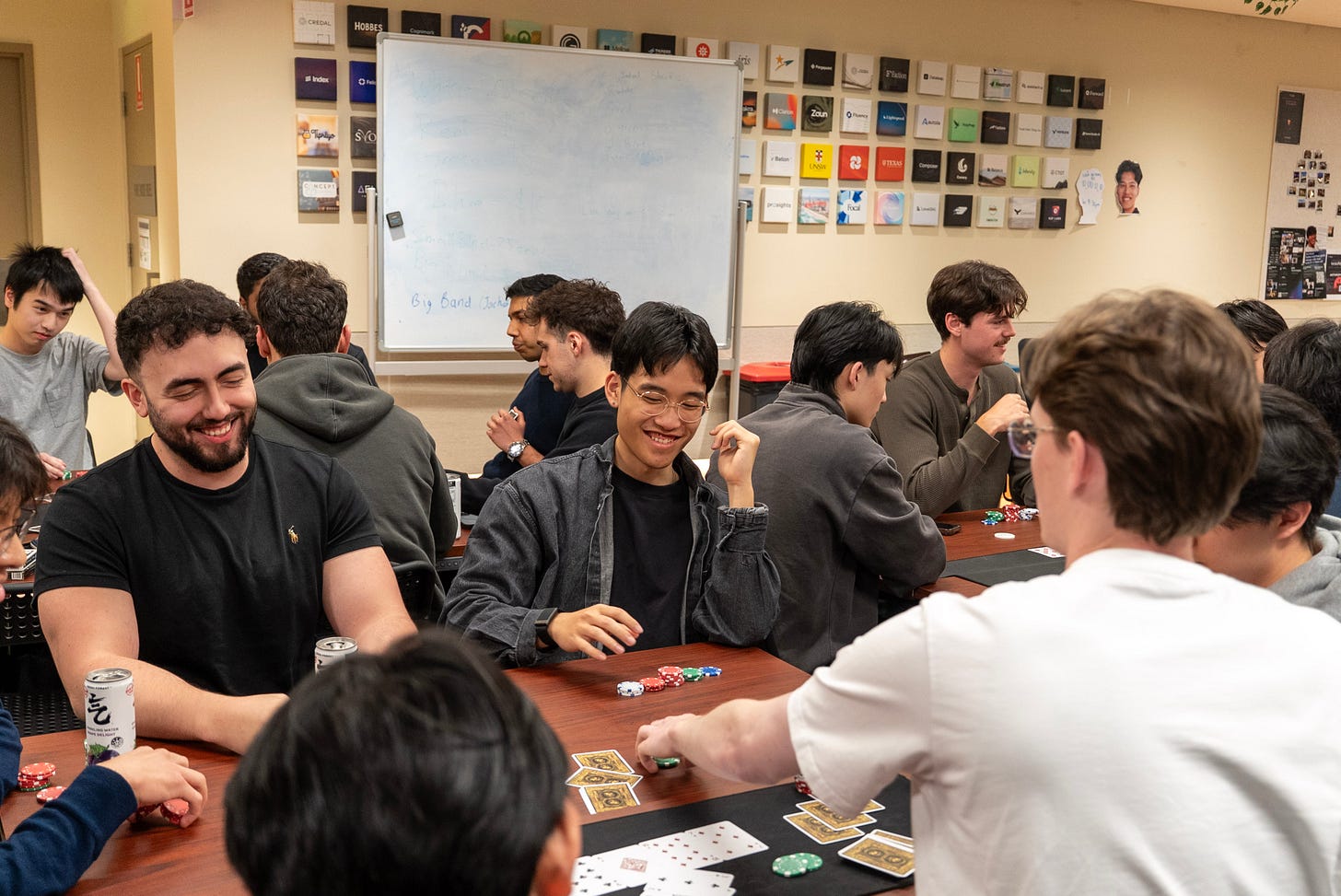
No matter how great of quality the type of people you attract, if culture is poor the hiring bar will fall. This is where Anh comes in. He is the bridge between those who come in and those who will stay on for years and years. As COO, he's the frontline to managing everything in-house. Rallying culture in new and exciting ways whilst making sure everyone is still performing to their potential. One of the best parts of my Lyra tour (other than the view) was seeing the Lyra board. It's a board that tracks pretty much anything. Group clubs like rock climbing, dancing, running and leaderboards for poker wins, steps, birthdays/milestones. Anh's approach is to allow everyone to have as much fun as possible knowing the level of how hard they work. If you want to attend a class, Lyra will cover it. Meals are covered for the team. Everything is designed so Lyra is a catalyst for performance on and off the field.
My favourite part of talking to Anh? It was hearing about the humble story. Lyra was, at its core, a scrappy duo trying to figure it out. There is no seven-figures ARR in 1 month story that gets plastered over social media. They sweated it out in the early days, struggled to find their feet but pushed on to get where they are today. The best founders leverage their superpowers to the highest degree. For the Dao brothers it was their network. They took over Silicon Valley with their name passed around by startup friends. Over time, their expertise became more refined, their speed of execution became unmatched and their talent pool become impossible to replicate. If there was a new player to come out of Aus, that could actually rival YC, I'd hedge my bets here. This is a team you can't help but root for.
Give Anh and Lyra a follow. Trust me on this one.
Get new pieces in your inbox.
Subscribe